









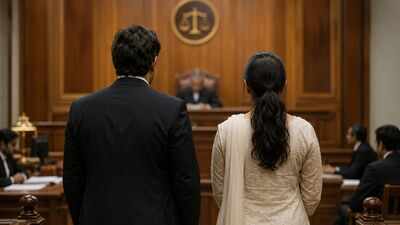
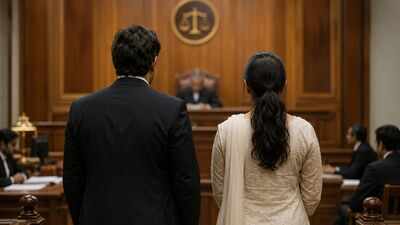
NEW DELHI: The Rajasthan high court has dismissed a husband’s plea seeking narco-analysis, polygraph and DNA tests on himself and his wife in a pending divorce case, holding that the application was filed too late and was not necessary to decide the dispute.Justice Sanjeet Purohit, sitting as Vacation Judge, upheld an order of the family court which had rejected the husband’s application filed under Order XVIII Rule 17 read with Section 151 of the Code of Civil Procedure, 1908.What was the issueThe wife had filed a divorce petition under Section 13(1)(2) of the Hindu Marriage Act, 1955, seeking divorce on grounds of desertion, cruelty, and allegations that her husband was sexually incapable and impotent.While the case was pending, and after both sides had already finished presenting their evidence and the matter was listed for final arguments, the husband filed an application asking the court to direct both parties to undergo a joint narco-analysis test, polygraph test, medical examination and DNA test. He said he would bear the full cost of these tests and wanted them to disprove his wife’s allegations, as per a report by LiveLaw.The wife opposed this, arguing that the evidence stage was already over and that the husband had not produced any medical evidence earlier to counter her claims. She also argued she could not be forced to undergo such tests against her wishes. The family court agreed with her and rejected the husband’s application. He then challenged that rejection before the high court.What did the court sayThe high court found no fault with the family court’s order and dismissed the husband’s writ petition.The court noted that the husband’s application came only after evidence on both sides had closed and the case had reached the final-arguments stage, and that he had not tried to bring any medical evidence on record earlier to rebut the impotency allegations during his own evidence.“The power under section 151 or Order 18 Rule 17 of the Code is not intended to be used routinely, merely for the asking,” the court saidThe court also cited Gayathri v. M. Girish, (2016) 14 SCC 142, where the Supreme Court had similarly disapproved of last-minute applications filed to fill gaps in evidence.“Applications for adjournments, reopening and recalling are interim measures, could be as far as possible avoided and only in compelling and acceptable reasons, those applications are to be considered.”The high court held that the husband’s prayer for a joint medical examination of both spouses was “wholly misconceived and legally untenable,” since the wife could not be compelled to undergo such tests without her consent. It also held that the husband had failed to show any relevance of narco-analysis, polygraph or DNA testing to the specific allegation of sexual incapacity.The court agreed with the family court’s finding that the burden of proving the impotency allegation was on the wife, who had made it, and that courts cannot be asked to collect evidence on a litigant’s behalf or fill gaps that a party was responsible for filling itself.Holding that its supervisory powers under Article 227 of the Constitution are limited and cannot be used to re-examine evidence just because another view is possible, the court found no illegality in the family court’s order, and dismissed the writ petition along with all pending applications.