








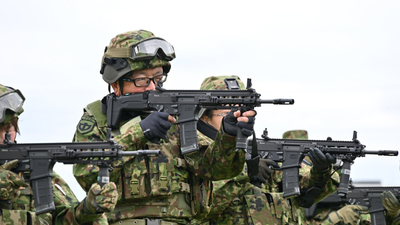
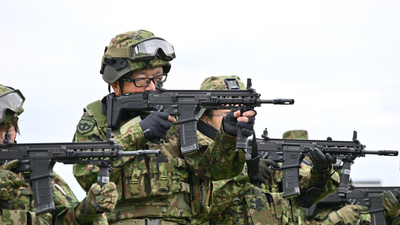
Japan has formally launched the National Intelligence Bureau (NIB), this is a watershed moment in the island nation’s post-World War-II security architecture. For, the last eight decades, Tokyo’s intelligence system was made up of different fragments, with the Cabinet Intelligence and Research Office (CIRO) struggling to coordinate across different agencies reporting to different ministries. This disjointed framework earned Japan the reputation of being a “paradise for spies,” as foreign intelligence services exploited gaps in oversight, according to a CNN report. The NIB, will replace the CIRO. The new agency is designed to centralise collection, analysis and the move is expected to compelling different agencies to share information. The setting up of the new apparatus will help form a detailed and holistic intelligence picture that will help decision-makers. The new agency will look at a different aspects of intelligence such as counterterrorism, foreign espionage, counter-espionage and national emergency response.Prime Minister Sanae Takaichi has been the driving force behind this reform. Since her election in 2025, she has consistently advocated stronger security measures, including revising Japan’s pacifist constitution. Her administration has sought advice from Western partners such as the United States, Australia, and Germany to strengthen Japan’s intelligence capabilities. The NIB will be subservient to the Japanese PM chaired National Intelligence Council, this body will also be composed of top ministers. This institutional overhaul is part of a broader recalibration of Japan’s security posture.The creation of the NIB coincides with Japan’s removal of its self-imposed ban on exporting lethal weapons, a move that is seen as the most concrete evidence of the country’s shift away from the principles enshrined in its 1947 constitution. That document, drafted under American supervision, renounced Japan’s sovereign right to warfare and embedded pacifism into its national identity. Yet successive geopolitical developments, have forced a rethink leading to chipping away of these constraints. The 2009 redefinition of collective self-defence allowed Japan to act in defence of allies. In 2015, Tokyo eased restrictions on foreign exercises.By 2022, the Japanese armed forces had procured long-range missiles to establish a counterstrike capability. A more concrete step, was the removal of 1% defence spending cap in 2024, this has led to Japan setting a target of 2% of GDP defence spend by 2027. The defence budget for the current financial year stands at $52 billion. Japan has also emerged as one of the largest importers of weapons, driven by concerns over China’s assertiveness and North Korea’s belligerence.After its defeat in 1945, the devastation of Hiroshima, Nagasaki, and Tokyo’s firebombing compelled the adoption of a pacifist constitution. The 1951 Treaty of Mutual Cooperation and Security with the United States placed the burden of Japan’s defence on Washington. Yet by 1954, with the spectre of communism rising in East Asia, Tokyo raised the Self Defence Forces, albeit with strict limitations.Japan has built its defence capability, that is based on its advanced industrial capability, which is reflected in its shipbuilding capabilities and exemplified by the Soryu and Taigei class submarines, Maya class destroyers and Izumo-class helicopter carriers. Its expertise extends to surface-to-air missiles, artillery systems and maritime patrol aircraft, making its entry into the global arms market significant. The domestic industry has positioned the island nation as a formidable naval power.India and Japan are working to address similar security threats in the Indo-Pacific. Both countries are members of the Quad alongside the United States and Australia. The Indian army, navy and air force conduct regular exercises with their Japanese counterparts, both nations are also exploring co-development and co-production of defence equipment. The Quad’s emphasis on a free and open Indo-Pacific aligns with Japan’s strategic recalibration.